I travelled to England in search of real ale, the cask-conditioned beer that is nearly impossible to find anywhere else in the world. Real ale differs from other beers because it’s produced and served in a distinctly British manner: a brewery makes a beer, ferments it with ale yeast, then the beer gets packaged in a cask that produces a secondary fermentation. The cask gets sent off to the pub where it undergoes this secondary fermentation (known as conditioning) in the pub's cellar. Flavor changes occur during secondary fermentation, in addition to CO2 production and the conversion of a small amount of residual sugar into additional alcohol. The landlord or cellar manager is in charge of monitoring the secondary fermentation and determines when the beer is ready to serve. They are also in charge of caring for the casks between service and ensuring that the taps serving the beer (the hand-pulled pumps called beer engines) pour pints properly.

Real ale is unpasteurized living beer, and like a fresh loaf of bread, the magic doesn’t last forever. Casks last only a few days after being tapped, so the window of service is shorter compared to keg beer. Cellar managers must have excellent sensory skills, tasting and assessing the beers in their cellar to ensure the quality is vibrant and fit for service. They may also pull a beer from service if it’s tasting past its prime. Beer making in general is a labor of love, but real ale takes things to another level. Two weeks of labor in the brewery, distribution of beer to cellars, conditioning and monitoring by the cellar manager, service and maintenance of the beer, and then sending the casks back to the brewery for cleaning, sanitizing, and refilling. Compared to keg beer, many more hands touch real ale before it’s poured into your glass.
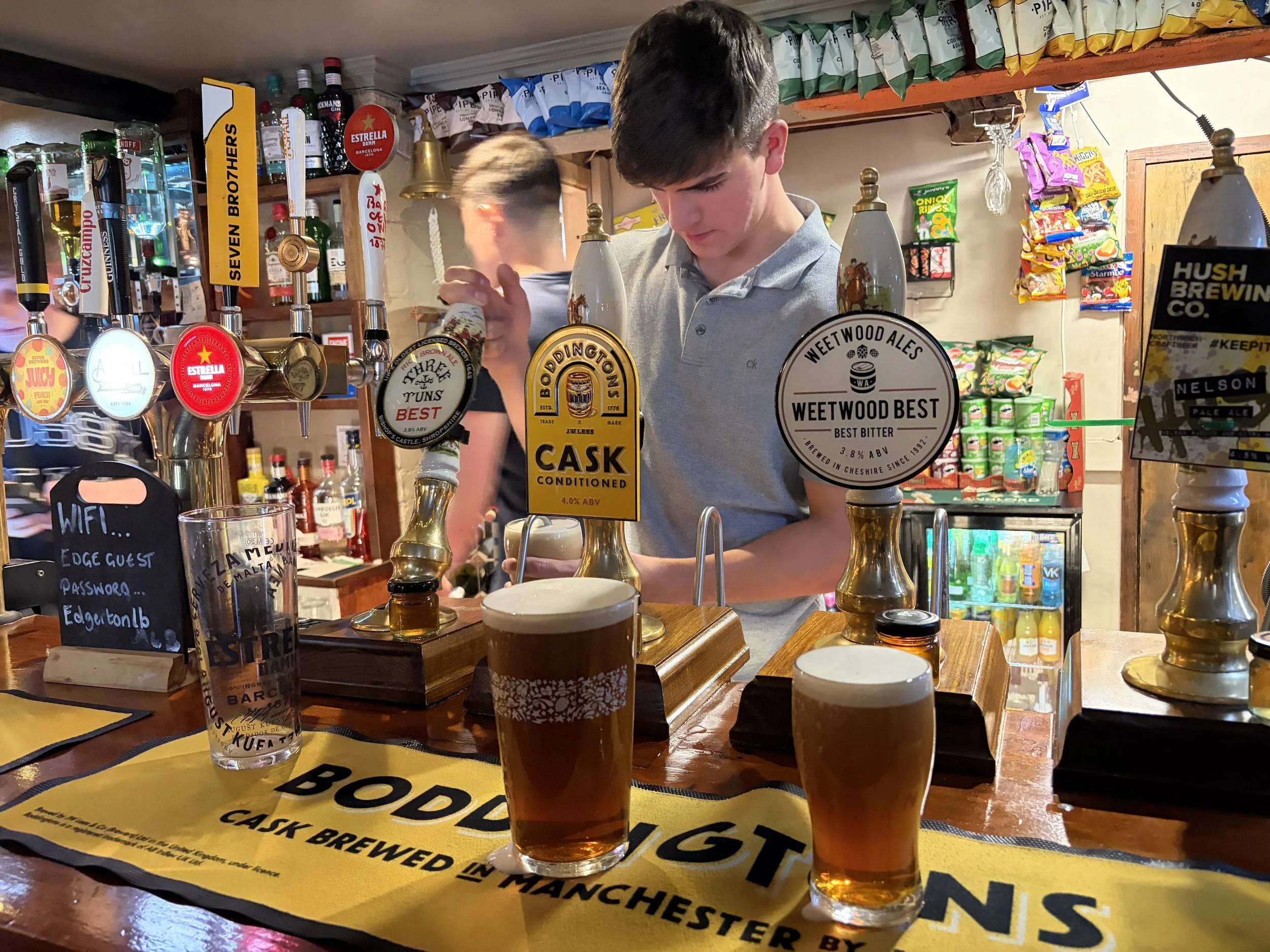
The novice real ale drinker will notice a few things when they order their first pint. England’s beer culture embraces very low ABV beers, and it’s not uncommon for the most popular beer on the menu to be 3.8% ABV. The English would rather have a few and stay for a while than have one and leave in a hurry; this is what the English Pub is all about. Creating a recipe for a low ABV beer requires subtlety and nuance. The intensity of these beers is lower compared to the ales of the US and Belgium, but that’s not to say they’re less flavorful. In fact, what makes real ale so impressive is the amount of character, flavor, and balance the English can pack into a sub 4% ABV beer.
Another quirk newcomers to cask may notice is that real ale may seem less cold and less carbonated than keg beer. These elements are purposeful. At cellar temperatures of 55 F (12-13 C), the yeast won’t get stressed like they may at colder temperatures. At cellar temperatures, yeast happily finish secondary fermentation, create natural CO2 for carbonation, and live healthily, keeping the beer fresh and vibrant. Another benefit of cellar temperature is the fact that aroma and flavor are more perceptible at slightly higher temperatures. Serving beer slightly less cold elevates the perception of the malt, hop, and yeast character. Real ales are subtle beers, so the boost in aroma and flavor from cellar temperature greatly improves the drinking experience.
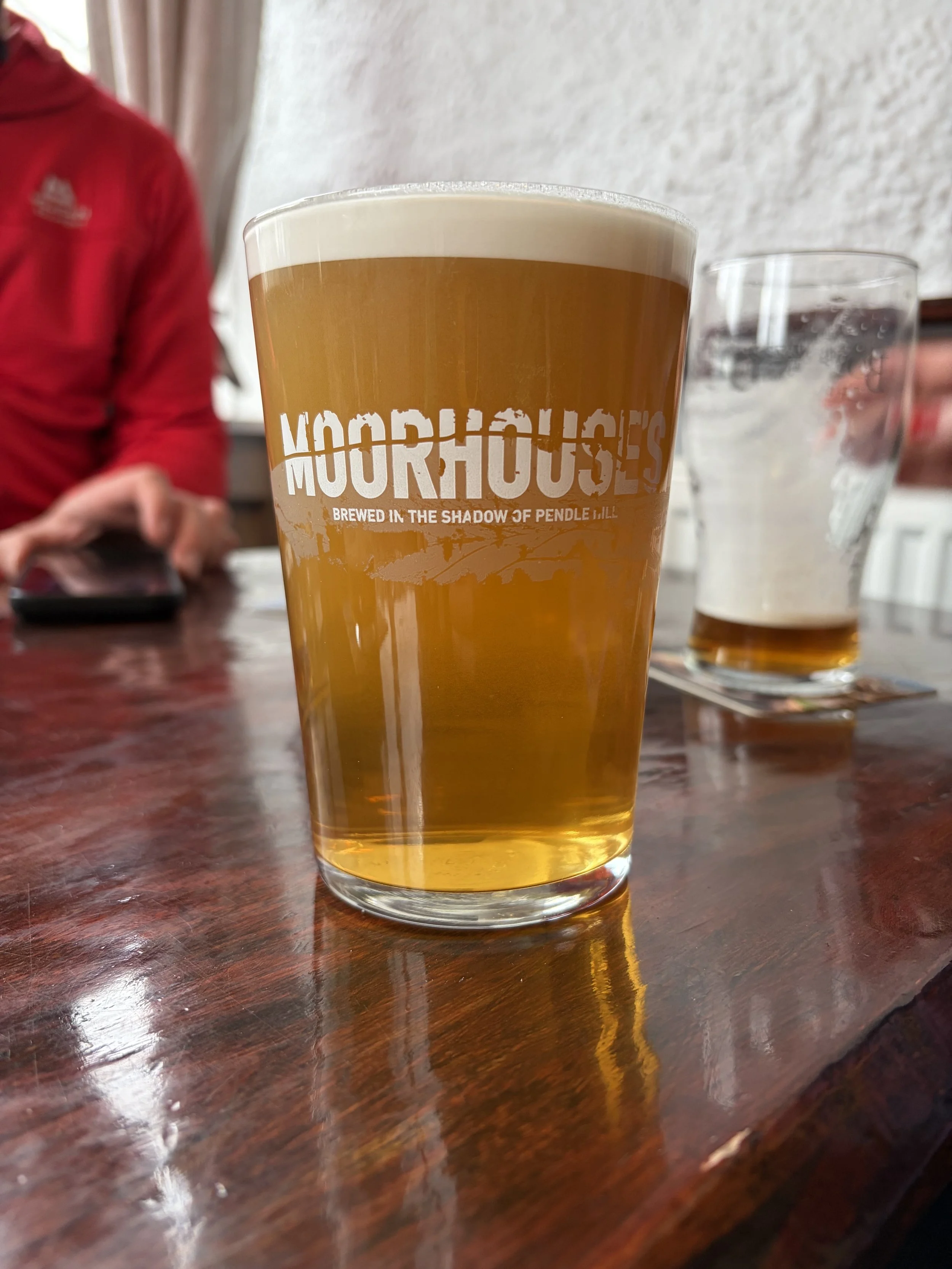
Lower levels of carbonation derive from the fact that real ale isn’t forced carbonated like beer in a keg. Most keg beers rely on external CO2 tanks that force carbonation into the beer and maintain its pressure, even as the keg empties. Real ale is a natural product, so carbonation is produced by yeast only, and the beer gets served from the vessel it was finished in. To maintain a consistent carbonation level, casks are vented of their CO2 and are not held under pressure. After the cask is vented of its pressure, the CO2 that remains in the beer is less than that of keg beer and does not require extraneous CO2 during service (1).
The lower level of carbonation changes the perception of the flavors by enhancing the mouthfeel and richness of the pint. An English bitter from a cask that was smooth and delicate on the palate would present much differently if the same exact ale was forced carbonated. It would seem thinner, lacking body, and perhaps even watery (remember, it’s 3.8% ABV). The ales brewed for cask are specifically formulated to be enhanced by lower levels of carbonation. The round and full mouthfeel I experienced from real ale impressed me. For a beer so subtle, the richness was profound on the palate and the flavors were greatly enhanced by the texture.
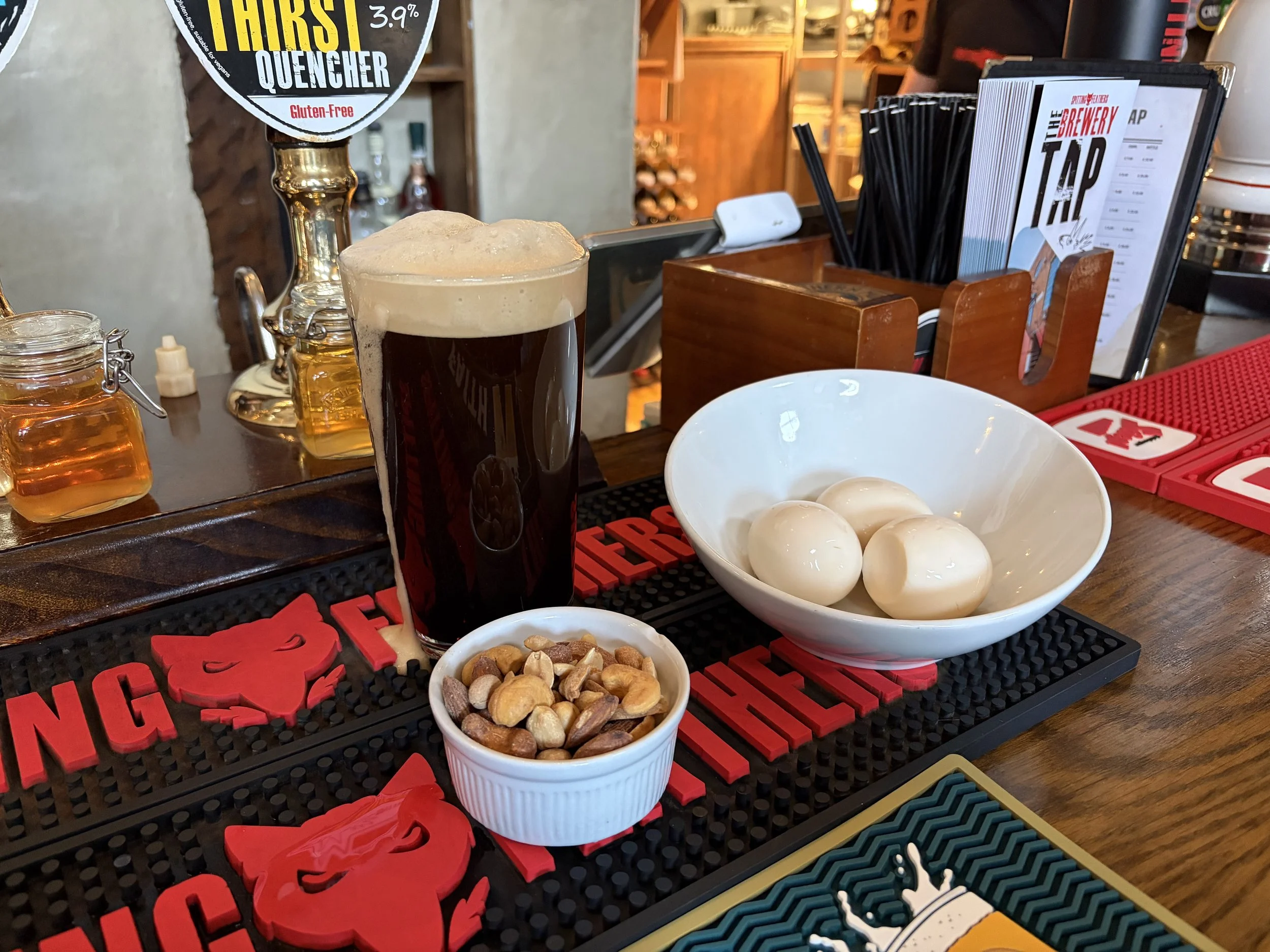
The best pints of cask ale I tasted had a pleasantly coating and almost silky mouthfeel that boosted the malt, hops, and yeast character. I think part of this magic comes from the water. The water used to make traditional cask ales is typically very high in calcium and sulfate, the hallmark water profile of the famous city of Burton-on-Trent in England. Several brewers inside and outside of the UK “Burtonize” their water to unlock British character in their ales. To do this, a brewer starts with reverse osmosis water that is stripped of all minerals, then adds minerals and salts to mimic the water profile found natively in Burton-on-Trent (2).
Calcium, the mineral rich in “Burtonized” water, is a key player in the richness of real ale. The calcium sensing receptors on the tongue are responsible for the sensory perception of kokumi. The kokumi sensation enhances flavors, making them seem richer by providing a more satisfying mouthfeel. Kokumi is also described as a sense of fullness, continuity, and mouth coating richness that makes flavors seem deeper and longer lasting (3). It’s important to note that kokumi differs from umami. Umami is one of the major tastes in addition to sweet, sour, salty, and bitter. Umami is the unctuous savoriness found in foods like mushrooms, parmesan, miso, and cooked tomatoes. Kokumi, on the other hand, is a flavor modifier that takes already-existing flavors and makes them seem bolder and more satisfying (3).
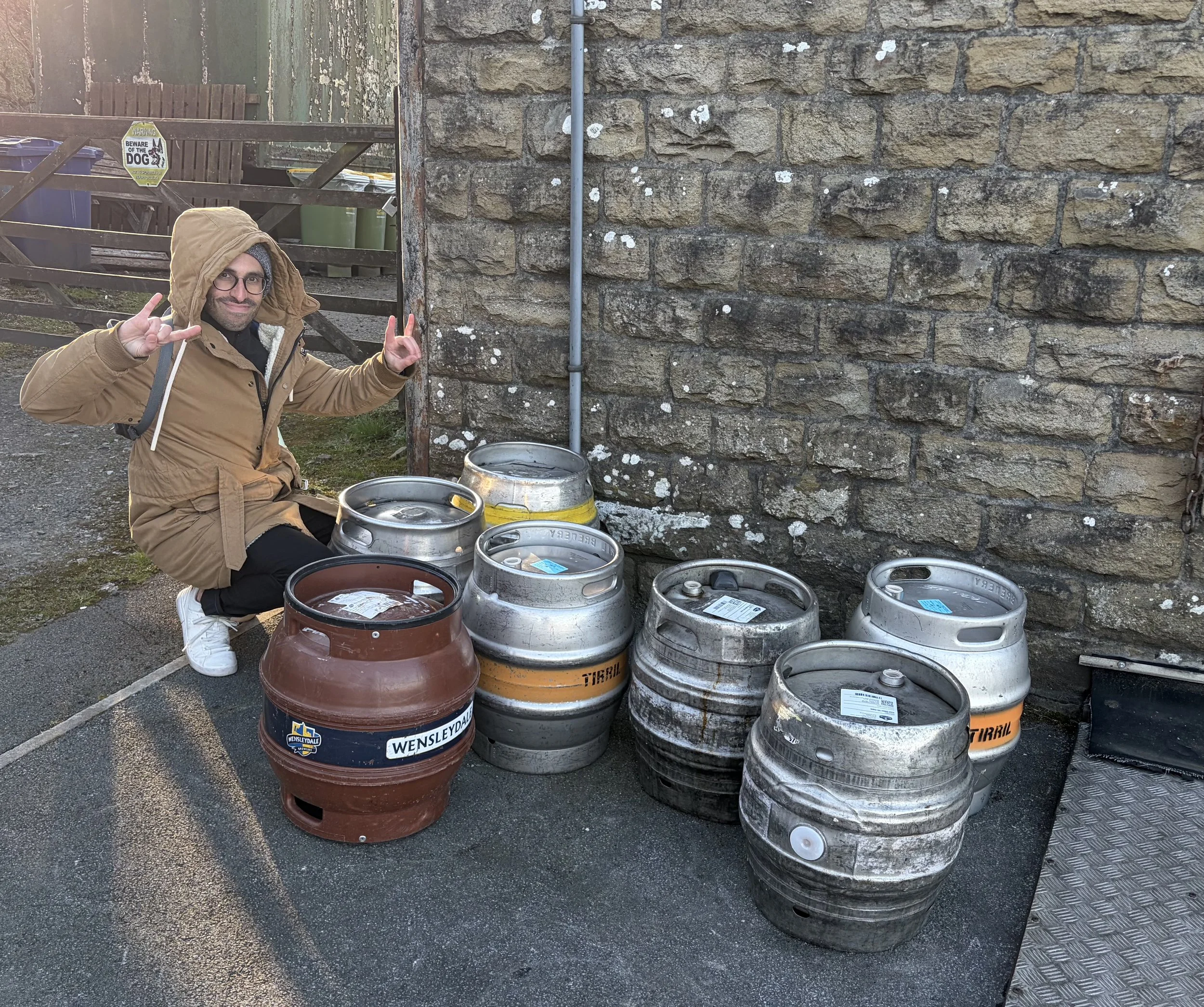
Kokumi is a recently understood phenomenon discovered by research commissioned by the Ajinomoto Group (the same company that first identified umami). Ajinomoto funded the research in hopes of finding a way to create a seasoning for food and drinks that would increase satisfaction and flavor without changing the way something tastes. A surely popular product for the diet food industry and others. The study identified peptides that activate calcium receptors on the tongue, and researchers discovered that certain peptides intensified savory, salt, and sweet flavors by activating these calcium receptors (4).
Yeast, like the kind used to make beer, can activate calcium receptors and trigger the kokumi response. Autolyzed yeast, yeast extracts, and inactive yeast are commonly used in the formulation of kokumi products. With gentle heat treatment and removal of the cell wall, it is possible to treat yeast in a way that renders it almost flavorless and taste inactive (5). Yeast is rich in gamma-glutamyl peptides, which bind to calcium sensing receptors. Once bound to the calcium sensing receptors, the kokumi response gets activated, and sweet, salty, and umami tastes become perceptibly more impactful, rich, and full (6). Real ale stays in contact with yeast from brew day until the last pint served, and I think that this yeast contact creates the kokumi sensation in cask ale.
Considering the contributions from yeast and the calcium rich water used to make the beer, I believe kokumi is in part responsible for making low ABV cask ale so perceptibly full and satisfying. This is no doubt emphasized by the lower carbonation level and cellar serving temperature. One can’t help but notice a similarity between what the Ajinomoto Group wanted to figure out (how to make something taste more satisfying despite a lack of richness) and what the British have been doing for hundreds of years (producing a low intensity beer that is full and satisfying). The connection between real ale and kokumi seems clear, but as of the date of this writing, there has been no other research into this matter. I’m convinced, though, that there is something special going on and the yeast-calcium-kokumi connection plays a role. So the next time you get a proper pint pulled from a beer engine, focus on the drinking experience. If the beer was brewed, cellared, and served with care, I assure you’ll notice the otherworldly satisfaction found only in real ale.
By Matthew Shapiro, September 2026
Resources:
https://beerwithnat.com/2019/09/12/dispense-digest-what-happens-inside-a-cask-beer-as-it-conditions/
How To Brew: Everything You Need to Know to Brew Great Beer Every Time by John Palmer, page 358.
https://www.sciencedirect.com/science/chapter/bookseries/abs/pii/S1877117326001080
https://academic.oup.com/chemse/article/doi/10.1093/chemse/bjag006/8494629
https://staging.bio-lallemand.com/en/our-businesses/savory-ingredients/taste-building/