Blind Panel Practice
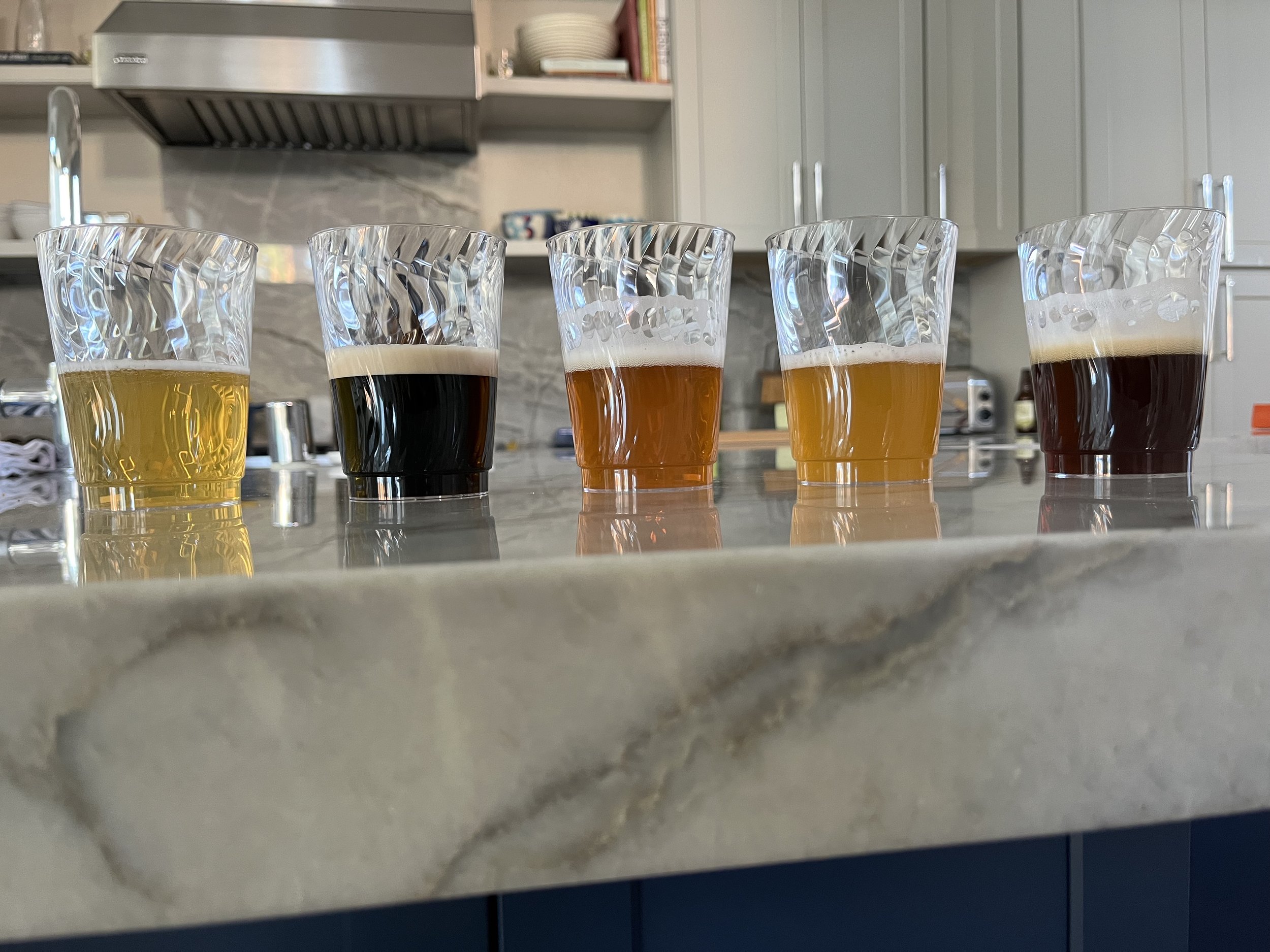
Here are some of my takeaways from recent practice style panels. My wife helped me out by selecting the beers (without me knowing what she picked) and giving me 4 choices to pick from.
How to narrow it down
My new strategy is to smell and taste the beer without seeing the answer choices. I go down the list and smell and taste for malt, yeast, hops, other aromas/flavors, bitterness, and balance. Doing this has allowed my instincts to help me out a bit more rather than being influenced by the answer choices. I recently smelled a beer and my gut told me quickly that it was Belgian- tons of banana right away, but also with pear, clove, pepper, and mint. Had I seen answer choices that included Weissbier, I think I would have gotten in my head a bit: “This smells like banana and Weissbier smells like bananas, so this could be Weissbier”. Instead, taking in the overall beer and evaluating the individual elements has helped me a lot in being more certain about what I’m perceiving.
Trusting your palate, changing your answers, and temperature changes
Going with my gut has helped me a lot, and there’s a lot to be said about sticking with your instincts and not second-guessing. Most of the time this technique works for me. However, since beer aroma and flavor expresses itself more strongly as it warms, I’ve allowed myself to change my answer if more gets revealed as the beer warms. For instance, the Cheerio/cereal aromas I perceive in German beers like Helles aren't as noticeable when the beer is very cold. It usually takes a few minutes of warming for those aromas to come out at a threshold I can pick up. The same goes for an American Lager’s rice/corn aroma, or even the aroma of fruity esters in an English beer. I once called a Märzen an American Amber because during my initial assessment, I detected caramel on the nose and decent bitterness on the palate. When the beer warmed up though, I noticed the German malt aroma and flavor that should have been my giveaway.
Impressions of bitterness can change too. If the first sample you taste is a double IPA, then you move onto a German Pils, you may be tempted to call the Pils a Helles as the bitterness may seem low/absent. Had you sipped an American Light Lager first, the bitterness may hit you over the head with the Pils as it would seem significantly more bitter in comparison. I’ve found that what I smelled or sipped first can influence the way I perceive the next thing I smell or sip. So if bitterness is the deciding factor and you’re feeling wishy-washy, go back to the sample after tasting a different beer or do a nose plug and test for bitterness.
Tasting and being familiar with a broad range of styles is critical to all of this though. Getting to know beers I don’t normally drink/have access to (like Weizenbock, Wee Heavy, Strong Bitter, etc.) has helped me with the confidence needed to quickly pick out distinctions and/or make changes to my answer if I detect new things as the beer warms. What I don't want to happen is to get a good sense of the beer’s aroma, but be unsure of what that aroma matches. Ideally, if I can get a good read on aroma/flavor, I should be able to quickly narrow it down to region and ingredient expression (ie this beer is Belgian because of the yeast profile), and then use the other clues I get from seeing, smelling, and tasting to lock down the style (ie there’s significant alcohol warmth, it’s dark, so likely a Belgian Dark Strong). Doing the style side-by-sides really helped me with this.
Tricky matchups that were very useful to investigate:
- Heineken: to me, the aroma is similar to a Helles (Cheerio/Pilsner malt) and that has been throwing me off. If I’m really honing in on it, I detect some mintiness, but the malt aroma and flavor stick out to me the most when analyzing this beer. I’ve been stumbling with this one and feel much more confident differentiating Helles from other International Pale Lagers like Corona, Red Stripe, and Asahi. The investigation continues!
- 805: I picked International Pale Lager, and the correct answer was American Blonde Ale. The color was spot on for American Blonde, so I missed that clue, but what tripped me up most was the lack of American hop character. I recently had a Kona Big Wave (another American Blonde) and there was definite American hop flavor and aroma. The 805 I tasted a few weeks ago had the “old hops” flavor (black iced tea), so I took that as “hops were here”. On the other hand, this recent sample of 805 didn’t have much detectable hop aroma/flavor, so I went with International Pale Lager, which better matches that profile. I’m not sure if I just missed the hop character, this beer was older, I’m tripping, or missing something else. It’s going back into my rotation to further investigate.
- Hofbraü Maibock (Helles Bock): I got a lot of caramel on the nose, so that led me away from the bready/grainy land of German beers to the US. There was also some decent bitterness, so I told myself: “amber color, aroma is caramelly and malted milk ball, bitterness is medium-high; this sounds very much like an American Amber”. When it warmed a bit though, there were definite Cheerio/cereal notes in addition to the caramel. It was super smooth, and I didn’t get a lot of warming from the Maibock (it’s 7.2% and the American Amber I’ve been testing with is 5.3%). Side-by-side, the alcohol warmth would have been more noticeable, but in this case, the beer was so well balanced that I missed any warming or harshness. Next time if I get a bitter and amber beer, I need to wait a beat and really investigate the malt more carefully. Also, forcing some warming action with a quick swallow and exhale to ensure it’s not a Bock beer seems like a good call.
- Rochefort 6 (Dubbel): this beer is significantly lighter than the other Dubbels I have been testing with, and I forgot it could be so light (see my Dubbel vs Dark Strong post). Since it was so light, I eliminated Dubbel and Dark Strong. There was definite fruit/alcohol character, so I eliminated Doppelbock and picked Wee Heavy (even though I’m used to Wee Heavies being darker than this). After letting the sample warm and tasting again, there was some spice/herbaceousness, and the finish was much drier than I’d expect in a Wee Heavy. This sample also had a yogurty note I detect in all the Rochefort beers.
- Smithwicks Irish Red: this beer was a lot darker than I expected it to be, and that really threw me. I picked International Amber Lager since the body was so light and there was low bitterness. Irish Reds (and some other UK beers) are subtle beers- very well balanced but not in-your-face. I mistook the low intensity for Intl Amber, but after letting the sample warm, I noticed caramel/toffee that I don’t perceive in Intl Ambers.
- Baltic Porter (Notch Polski): I didn’t have access to any commercial examples that the guidelines state, but the beer I got was from an awesome producer, and I feel like it holds true to the character of Baltic Porter. This is a style I’m pretty unfamiliar with, and I mistook it for American Porter because it was so smooth and lacked significant alcohol warmth. There was a lot of fruit on the nose and palate, but since I get notes of currants from some porters like Black Butte, I second guessed myself. I did pop open a Black Butte Porter after missing it, and the differences were significant. Black Butte has a very light body, dry finish, and much more upfront lightly roasted coffee character. The Baltic Porter had very little coffee, a medium-high body, a decent amount of residual sweetness, and some alcohol warmth when I tested it with a quick sip and exhale.