Estery, Phenolic, European
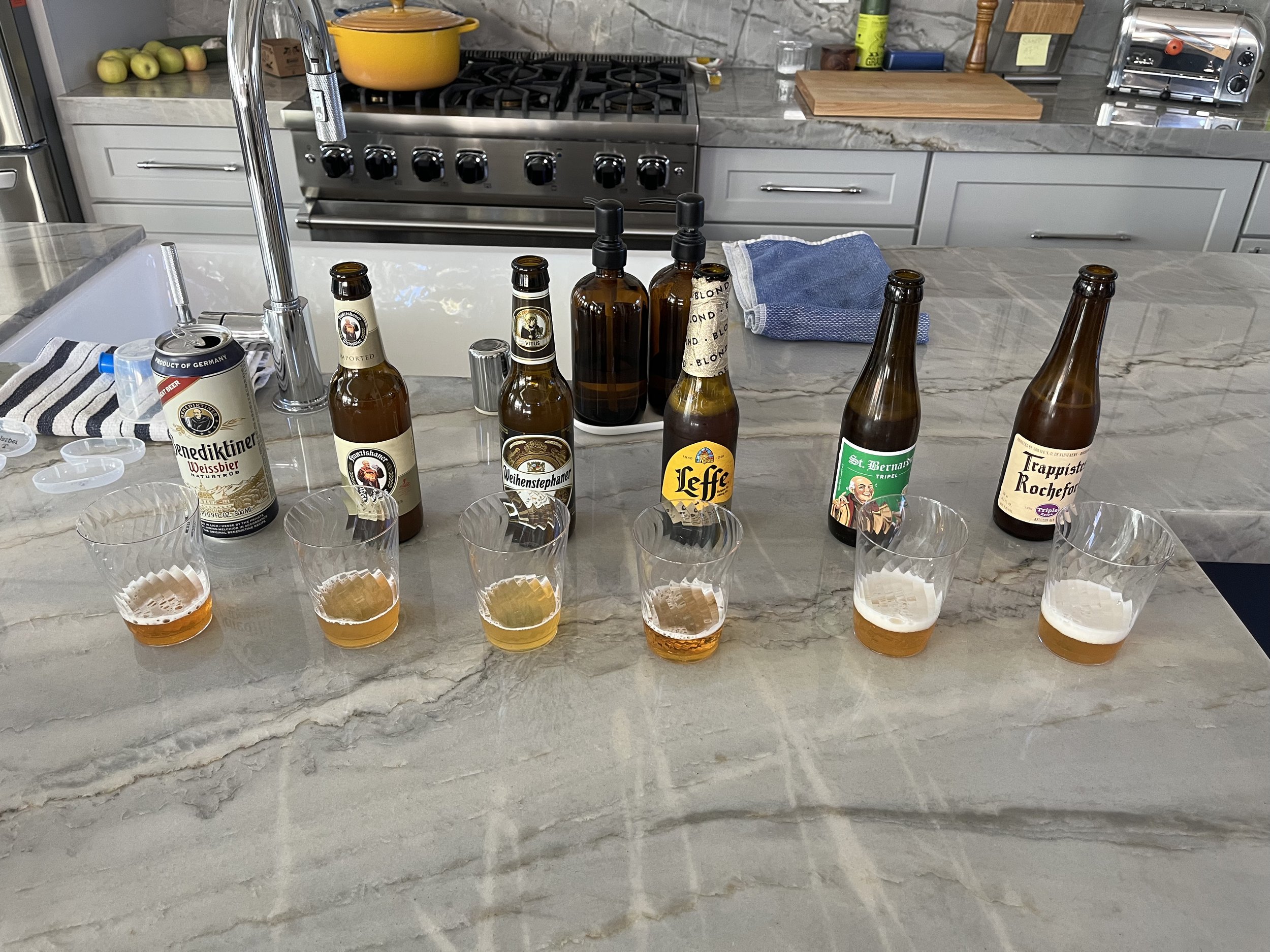
Weissbier, Weizenbock, Belgian Blond, Belgian Tripel
Benediktiner Weissbier, Franziskaner Weissbier, Weihnstephaner Vitus (Weizenbock), Leffe (Belgian Blond), St. Bernardus Tripel, Rochefort Triple Extra
St. B vs Rochefort (Tripel)- Rochefort has a ton of hops on the nose and high levels of bitterness. I detected a yougurty flavor too, which seems to be common for Rochefort beers. St. Bernardus Tripel was much more highly attenuated and had a lot of clove, pepper, and other spices. It was very banana forward, but also had some nice pear notes. It was very bitter.
Leffe: mint/hyssop on the nose and palate in addition to banana and wheat. I also detected some jasmine/floral notes. Medium/medium-low bitterness with some lingering sweetness on the palate.
Vitus: high levels of banana runt candy aroma and wasn’t as warming as I expected it to be for a 7.7% beer. I could force some warming with a quick sip and exhale, but it was way more subtle that I expected it to be- very well balanced! There was noticeable heaviness/sweetness that lingered on the palate and wasn’t present in the Weissbiers.
Benediktiner and Franziskaner: very dry, not much perceived bitterness, and mild banana/clove aroma and flavor compared to Vitus and the Tripels. High carbonation that fizzled away quickly on the palate.
St. Bernardus Tripel vs Vitus: this was much harder than I expected since St. B has a lot of banana character. The big giveaways were bitterness (much stronger/upfront/lingering in St. B) and Weizen yeast character in Vitus (strictly banana runts/bubblegum/clove, where St. B had other spices and fruit). It was strange- on my first try, the differences were much more apparent, but as I kept trying, it got harder and harder to pick out the differences.